
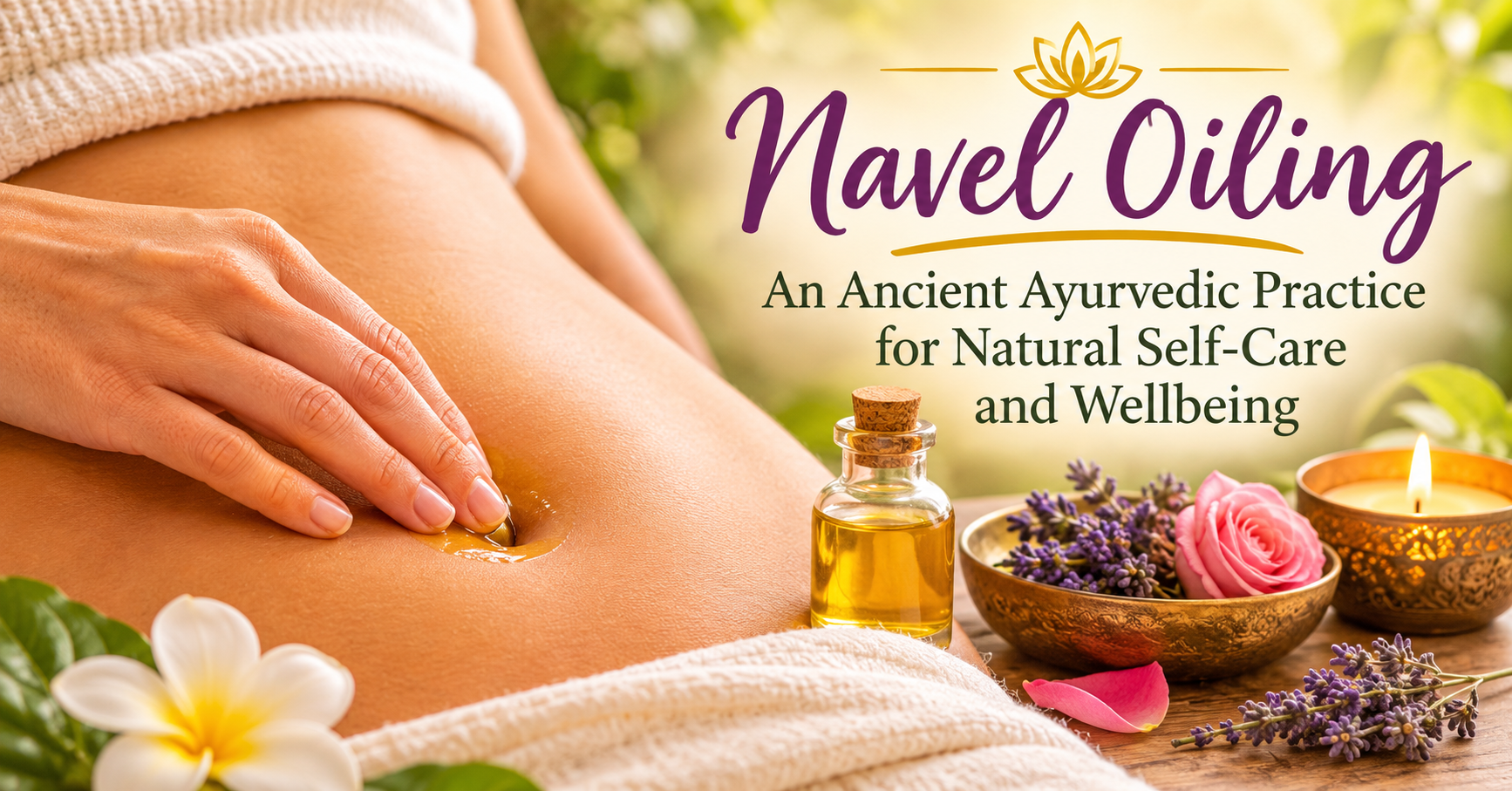
The Benefits of Naval Oiling: An Ancient Ayurvedic Practice for Relaxation, Self-Care and Wellbeing
Have you ever considered giving your belly button a little attention as part of your self-care routine? It might seem like an unusual place to apply a little oil, but navel oiling is a practice with roots in traditional Ayurvedic wellbeing, where the navel has long been regarded as an important centre of the body.
Sometimes called Nabhi Chikitsa, or navel therapy, the practice involves applying a small amount of natural oil to the belly button and gently massaging the surrounding abdomen. Different oils are traditionally selected according to their qualities, fragrance and intended purpose.
It can become a simple evening ritual, giving you a few moments to slow down, reconnect with your body and enjoy the sensory qualities of natural oils.
Let’s take a closer look at where the practice comes from, how to try it safely and which oils you might like to explore.
The Navel: More Than Just a Little Scar
Our belly button is a fascinating reminder of where our lives began.
Before birth, the umbilical cord connected us to the placenta, allowing oxygen and nutrients to pass between mother and developing baby. After birth, the cord is separated, leaving behind the little scar we know as our navel.
In Ayurveda, the navel is known as Nabhi and is traditionally regarded as an important centre of the body. It is associated with the body’s vital energy, digestion and the interconnectedness of physical wellbeing.
Some Ayurvedic traditions also regard the navel as an important energetic centre, connecting it with the body’s natural balance and vitality.
From an energetic perspective, you might also associate this area with the Solar Plexus Chakra, known in Sanskrit as Manipura. This chakra is traditionally linked with personal power, confidence, determination, transformation and our inner fire. It is an interesting meeting point between physical and spiritual interpretations of the body.
What Is Navel Oiling?
Navel oiling is a simple self-care practice involving the application of a small amount of natural carrier oil to the belly button.
In traditional Ayurvedic practice, oils such as sesame, coconut and almond have been used in different forms of massage and body care. The idea is to make oiling part of a regular routine, often in the evening before bedtime.
You might choose a simple nourishing oil, or create a personalised blend using a carrier oil and a carefully selected essential oil.
With the benefits of naval oiling you can realistically enjoy include:
Moisturising dry skin around the navel.
Enjoying the soothing sensation of gentle abdominal massage.
Creating a relaxing bedtime ritual.
Experiencing the comforting aromas of natural essential oils.
Taking a few minutes to reconnect with yourself and your body.
For me, one of the loveliest aspects of practices like this is that they encourage us to become more mindful of our bodies. We spend so much of our time rushing around that even a few minutes of intentional self-care can feel rather special.
How to Practise Navel Oiling
You don’t need anything complicated to get started. A little carrier oil, clean hands and a few quiet moments are all you need.
I would suggest trying this in the evening, when you have time to relax without feeling rushed.
Step 1: Prepare your skin
Make sure your belly button is clean and completely dry before applying any oil. The navel can naturally collect moisture, dead skin and debris, so cleanliness is important.
If you have a deep-set belly button, gently clean it with a soft, damp cloth and dry it carefully. Avoid vigorous rubbing or inserting objects into it.
Step 2: Choose your oil
Select a carrier oil that suits your skin and preferences. You can use a plain carrier oil on its own or prepare a suitably diluted essential oil blend.
For your first attempt, I would recommend keeping things simple with a little sweet almond, jojoba or coconut oil.
Step 3: Apply a small amount
Place one or two drops of carrier oil onto your fingertip and gently apply it to the navel and surrounding skin.
There is no need to fill the belly button with oil or use large quantities.
Step 4: Massage gently
Using your fingertips, massage the skin around your navel in small, gentle circular movements.
You can extend the massage a little way across your abdomen if this feels comfortable. There is no need to apply pressure.
Step 5: Relax
Take a few slow breaths and enjoy the moment.
If you are using an aromatic blend, allow yourself to appreciate its fragrance. You might like to combine this with a little meditation, calming music or a few positive affirmations.
You can simply wipe away any excess oil afterwards.
Choosing Your Carrier Oils
Carrier oils are vegetable oils used on their own or to dilute concentrated essential oils before applying them to the skin.
Each has its own texture, consistency and skin-conditioning qualities.
Here are some lovely options to consider.
Sweet Almond Oil
A gentle, nourishing oil that is popular in massage and skincare. It has a lovely silky texture and is particularly suitable for people who enjoy a richer moisturising oil.
Avoid if you have a known almond or tree-nut allergy.
Coconut Oil
A popular choice for moisturising and conditioning the skin. It has a thicker consistency and may be particularly appealing if you prefer a more substantial oil.
Choose fractionated coconut oil if you would prefer a lighter liquid that remains fluid at room temperature.
Jojoba Oil
Technically a liquid wax rather than a conventional vegetable oil, jojoba has a texture similar to the skin’s natural sebum. It is lightweight and absorbs comfortably, making it a lovely option for people who dislike heavier oils.
Grapeseed Oil
A lightweight oil with a silky feel. It is often chosen for massage because it spreads easily without leaving an especially heavy residue.
Sesame Oil
Traditionally important in Ayurvedic massage, sesame oil is a warming-feeling, nourishing oil with a richer texture. It is a lovely choice if you want to explore the traditional side of navel oiling.
Olive Oil
A readily available household oil that can be used to soften and moisturise dry skin. Its heavier texture means a little goes a long way.
Castor Oil
A particularly thick, rich vegetable oil traditionally used in various forms of massage and body care. It can feel quite sticky, so you may prefer to use it sparingly or blend it with a lighter carrier oil.
Essential Oils: Creating Your Own Personal Blend
If you enjoy aromatherapy, you can introduce a little essential oil into your navel oiling ritual.
Essential oils are highly concentrated aromatic extracts from plants, flowers, herbs, roots and trees. They have different fragrances and chemical compositions, known for their wellness healing effects.
However, essential oils should never be applied undiluted to the skin.
For a gentle starting blend, I suggest using approximately 1% essential oil dilution. This is around two to three drops of essential oil in 10ml of carrier oil, although drop sizes vary.
Always check the individual oil’s safety guidance, as some have lower permitted skin concentrations.
Here are some oils you might like to explore.
Lavender
One of the best-known essential oils for relaxation. Its soft floral fragrance makes it a lovely choice for an evening self-care ritual.
It is traditionally associated with calmness, rest and tranquillity.
Roman Chamomile
A gentle, comforting floral aroma, often associated with relaxation and emotional balance.
It makes a lovely addition to a calming massage blend.
Frankincense
With its warm, woody and slightly resinous fragrance, frankincense is a beautiful oil for meditation and reflective practices.
It is particularly lovely if you want to create a more spiritual atmosphere around your self-care routine.
Sweet Orange
A cheerful, uplifting citrus fragrance that can help create a brighter, more positive atmosphere.
It is a lovely choice for a morning ritual or whenever you want a little aromatic sunshine.
Geranium
A beautiful floral, slightly rosy fragrance, often used in skincare and aromatherapy blends.
It is traditionally associated with emotional balance and feminine wellbeing.
Ginger
A warm, spicy aroma that is often used in warming massage blends.
It can be an interesting addition to a comforting body-care ritual, particularly during colder weather.
Rose
A luxurious floral essential oil traditionally associated with love, compassion and emotional nourishment.
Its fragrance is particularly beautiful when combined with frankincense or geranium.
Peppermint
A fresh, cooling and invigorating fragrance. It can be useful when you want a refreshing aromatic experience, although it may irritate sensitive skin and should be used with particular care.
Avoid using peppermint oil on or near babies and young children.
Which Oils for Which Complaints?
You can choose oils according to their traditional aromatherapy associations and their suitability for skin massage:
- For relaxation and winding down: Try lavender, Roman chamomile or frankincense in a suitable carrier oil.
- For an uplifting mood: Sweet orange or geranium can provide a bright, cheerful fragrance.
- For a comforting massage: Ginger or lavender may be pleasant additions to a gentle massage oil.
- For dry skin around the navel: Try plain jojoba, sweet almond or coconut oil. These carrier oils can help condition the skin without needing essential oils.
- For a meditation or spiritual self-care ritual: Frankincense, rose or sandalwood offer beautiful fragrances that can complement quiet reflection and meditation.
- For a fresh, invigorating aroma: Sweet orange or a carefully diluted peppermint blend may be appealing, provided you have checked the relevant safety precautions.
These are suggestions for the sensory and skincare aspects of oiling, not treatments for internal medical complaints.
Raine Hilton Good Vibes Holistic Therapies